• Skip to primary navigation
  • Skip to main content
  • Skip to primary sidebar
  • Skip to footer
  • Skip to navigation
Close Ad

The Spoon

Daily news and analysis about the food tech revolution

  • Home
  • Podcasts
  • Events
  • Newsletter
  • Connect
    • Custom Events
    • Slack
    • RSS
    • Send us a Tip
  • Advertise
  • Consulting
  • About
The Spoon
  • Home
  • Podcasts
  • Newsletter
  • Events
  • Advertise
  • About

CES

January 27, 2026

Why Subtle Tech and Countertop Appliances, Not Robots, Are Driving Kitchen Innovation

For much of the past couple of decades, talk of the future kitchen at CES has conjured tech-forward images of robotic arms sautéing vegetables, humanoids flipping burgers, and, more recently, AI-powered assistants hovering over the stove. But during a conversation I had with a panel of kitchen insiders a couple of weeks ago in Las Vegas at The Spoon’s Food Tech conference, they made a compelling case that the future of cooking looks slightly more mundane, yet far more useful.

I was joined by Robin Liss, CEO of Suvie; Jonathan Blutinger, senior design engineer at Smart Design; and Nicole Papantoniou, director of the Kitchen Appliances Lab at the Good Housekeeping Institute. Together, they painted a picture of a near-term kitchen future shaped less by futuristic robots and more by quiet, behind-the-scenes intelligence.

To set the table (sorry), I started the conversation by asking where we’ve actually been over the last decade when it comes to the smart kitchen. Papantoniou said a core mistake made by early smart kitchen products was trying to solve problems consumers did not actually have. “A lot of people were putting smart features into products that you didn’t really need,” she said. “I don’t think people understood why they needed Alexa to make coffee for them.” Instead, she argued, success today comes from friction reduction. “It’s becoming way easier, very seamless, and people use it without even realizing it now”.

That shift toward subtlety was echoed by Blutinger, who said many early smart kitchen products were over-engineered. “Just because you can doesn’t necessarily mean you should,” he said. “It should be coming from a human need”.

Slap Some AI on It

A huge percentage of booths at this year’s CES claimed their product was AI-powered, which had me wondering whether today’s market risks repeating the mistakes of the smart kitchen a few years ago, when everyone was “slapping Wi-Fi on everything.” Liss argued that AI today is fundamentally different from the Wi-Fi-first era of connected appliances. “Almost all these products have embedded software or cloud-connected software,” she said. “The way we look at AI is it’s not some all-encompassing model… it’s integrations into steps of the process”.

Blutinger said AI’s biggest problem may be the overuse of the term by marketers, and that while the AI-ification of products is inevitable, both the label and the tech will eventually recede into the background. “That word alone has created such a stigma around it,” he said. “The technology should not be upfront and personal. It should be invisible in a sense”.

Papantoniou agreed, predicting consumer acceptance will likely be higher once AI fades into the background. “Once people stop advertising that it’s AI and it’s just part of the normal product, it’ll be way more accepted”.

Hold the Humanoids

As with my other session at CES focused on food robots, I asked the panelists when, if ever, we’d see humanoid robots walking around our kitchens. And just as with that other panel, they were skeptical.
“I still think that’s really soon for us to be seeing it in the home kitchen,” said Papantoniou. “Five years is soon”.

Liss said the adoption of food robots in the home would hinge on safety and practicality. “Food is inherently dangerous, and kitchen appliances dealing with high heat are inherently dangerous,” she said, noting that even in commercial settings, “getting the robot not to hurt the workers around it… that’s the hard part”.

Instead of humanoids, the panel advocated task-specific automation.
“We are designed as humans to do so many range of tasks,” said Blutinger. “Like we have to be perfect for so many things. It’s not like cooking takes up 100% of our time. So if we’re trying to optimize for just automation in the kitchen, why do we need these complex articulated (robot) arms doing things? Why not just have like a simple little one degree of freedom rotating thing that just rotates our sauce?”

Why Countertop Appliances Keep Winning

Despite talk of built-in, do-everything cooking boxes, the panelists agreed that innovation will continue to favor specialized countertop devices.

“I would say that probably the reason you’re seeing so many, the proliferation of lots of little countertop appliances, which makes me very happy, is because the innovation is happening there,” said Liss. “And frankly, if you look at the breakout companies, the stock performance of Breville, Shark Ninja, are, you know, Breville is larger than Whirlpool, Shark Ninja is many multiples larger than Whirlpool. It’s because all of the innovation is happening on the countertop because of that replacement cycle challenge of major appliances.”

Papantoniou was blunt about the trade-offs that come with multifunction. “There is that stigma that multifunctional appliances don’t do everything well. And while it’s gotten a lot better, I would say like an air fryer function in an oven is not going to compete with your basket air fryer.”

The Future of The Kitchen Has More Personalization and Less Friction

For my final question, I asked the panelists to look ahead and describe what they see for the kitchen over the next few years, and it was clear they were aligned around a quieter vision of progress.

Papantoniou predicted broader adoption as fear subsides. “People are adopting it more and not being so scared of it and not judging it as harshly, I think, as they did in the past. I think people actually do want their coffee maker to start working while they’re still in their bedroom. So I think that’s gonna just be coming more,” she said.

Blutinger focused on usability. “I think just reduce friction in the kitchen. That’s the biggest thing if you’re trying to innovate in the kitchen space.”

Liss closed with a vision for the future centered on humans, not robots. “I think it’s healthier, more personalized food, cooked how you want it. You’re getting to spend, most importantly, is families getting to spend time with each other happily enjoying meals for those everyday weeknight meals rather than spending an hour, mom spending an hour prepping the food or wasting money on really expensive delivery, right? It’s like a better life for people because they’re eating healthy, good food at home, saving money, and spending time with their loved ones.”

You can watch the full session below.

CES 2026: The Kitchen of the Future: AI, Robotics & Smart Tech

.

January 15, 2026

Will Giving Everyone a Blood Sugar Monitor Lead to Better Health Outcomes? Maybe, But Only If We Tell People What to Do With The Info

Last year, I used a continuous glucose monitor (CGM) for the first time, and it completely changed how I eat.

After a couple of weeks using an over-the-counter Stelo CGM, I learned that sugary snacks shoot my blood sugar into the stratosphere, salads and veggies keep it at a manageable level, and light exercise, even a short walk after a meal, helps bring it down almost instantly.

This information was so revelatory that I began to wonder whether putting CGMs and the information they provide into the hands of a broader set of people could help us better manage societal health over time. After all, if it changed the way I eat, could it do the same for millions of others?

One way to explore that question is to talk about the technology with smart people. Last week at CES, I did just that when I moderated a session titled “From Brainwaves to Blood Sugar: How Next-Gen Tech Shapes Diets” during The Spoon’s Food Tech Conference at CES. I purposely programmed the session with a mix of panelists to bring medical, startup, investor, and researcher perspectives to the conversation.

After sharing my experience with a Stelo CGM on stage, I asked Howard Zisser about the importance of over-the-counter CGMs. Zisser, a physician and longtime pioneer in diabetes technology who worked on some of the earliest CGM systems in the early 2000s, when the technology was designed almost exclusively for people with diabetes, said the value of these newer CGMs lies in the data and what you can do with it.

“Instead of one or two readings a day, you suddenly have 300, 500, 600 readings a day,” Zisser said. “You start to see trends. What happens when you fast, when you exercise, during a menstrual cycle. IYou get a rich data set that’s your data personally.”

When I talked about how jarring my own experience was in seeing my blood sugar spike, Zisser argued that the shock is part of the value. Unlike biomarkers such as cortisol, which are difficult to influence in real time, glucose is actionable.

“You see it, and you can change your behavior,” he said. “Next time, you make a different choice.”

He likened glucose feedback to learning how to drive with a speedometer. Without it, he said, you’re guessing. With it, you can learn how your actions translate into outcomes.

But not everyone will wear a sensor on their arm. Noosheen Hashemi, founder and CEO of January AI, argued that while hardware CGMs are powerful, they are not scalable to the hundreds of millions of people with undiagnosed prediabetes or metabolic dysfunction. She said technology like that developed by her company leverages machine learning models trained on years of CGM data to predict glucose responses without requiring buying a hardware sensor.

“Our claim to fame is creating the world’s first continuous glucose monitor with AI,” Hashemi said, explaining that the system can generate directionally accurate predictions using inputs such as age, weight, activity level, sleep, and food intake.

But for all the data and actionable insight these tools can provide, they do not guarantee lasting change. Sherry Frey, VP of Total Wellness at NielsenIQ, shared research showing that even after receiving a diagnosis and initially adjusting their diets, behavior often reverts within months.

“We actually see about nine months in that a lot of behavior reverted,” Frey said. “When people were maybe less engaged and a little tired of of having to eat differently.”

That drop-off highlights both the opportunity and the challenge for health technology. Sustained engagement requires more than numbers on a screen. It requires context, interpretation, and motivation.

Frey also noted that adoption of wearables and health-tracking technologies is expanding beyond affluent early adopters. One of the fastest-growing user groups, according to NielsenIQ data, includes consumers on SNAP benefits, many of whom are using these tools for chronic disease management rather than fitness optimization.

“The addressable market is much larger than people with diabetes,” Frey said.

As we discussed what makes behavior change stick, I asked whether giving consumers more data, as the Nest thermostat did starting a decade ago, would prompt lasting change. Peter Bodenheimer, U.S. venture partner at PeakBridge VC, said yes, but only if the insights are actionable.

“Insights that tell you, ‘if I do this, then something good or bad happens,’ tend to be the things that people respond to and maintain.”

The panel also acknowledged the downside of constant feedback. More data can mean more confusion, anxiety, and misinformation. Hashemi shared an example of a user who believed their glucose should never rise above 110, a misunderstanding fueled by social media rather than clinical reality.

“Metabolic fitness is how you go from fasted to fed efficiently,” she said. “It’s a preposterous idea to keep your blood sugar the same all the time. So yes, there’s a lot of misinformation.”

Zisser reinforced that interpretation depends heavily on individual context, goals, and physiology. The same glucose spike can mean very different things for a professional athlete, a person with diabetes, or someone trying to lose weight.

We also discussed other technologies that can help us understand what’s happening inside our bodies, such as neural implants and other next-generation sensors. Hashemi pointed to implantable sensors capable of reading multiple analytes for years at a time, as well as emerging efforts to continuously measure substances like lactate, ketones, alcohol, and eventually insulin.

“Yeah, there’s definitely implantables,” said Hashemi. “There’s one that reads 20 different analytes, including glucose. It lives, you have to inject it under your skin. It can live 900 days. And it’s still in animals. It’s not in humans yet. But these things are coming.”

As the number of measurable signals grows, so do concerns about privacy, trust, and data ownership. Frey noted that while many consumers want their health data integrated in one place, roughly half remain uncomfortable with embedded sensors and worry about how their information might be used by insurers, governments, or corporations.

Others felt that the benefits of these technologies may ultimately outweigh more abstract fears. When people see tangible improvements in sleep, energy, or focus, trust can follow.

“No government, no doctor can make somebody healthy,” Hashemi said. “The only person that can do that is yourself.”

As we wound down the session, we talked about personalized nutrition, a topic that has long been a point of heated discussion in the world of food and health. The panelists agreed that while personalized nutrition may never be perfectly precise, the combination of biological data, AI, and human context is moving the industry closer to that goal.

“The gold lives in the combination of data,” Hashemi said, suggesting that consumer-generated health data will increasingly merge with clinical care, especially as value-based healthcare models expand.

In the end, the promise of next-generation health tech may be less about perfect prediction and more about empowerment. One idea that Zisser suggested was possibly getting these types of technologies into the hands of young students as we are teaching them how to eat.

“When my dad taught me how to drive, he didn’t put me in a car without a speedometer, right? It’s like, have feedback, I have information. And so to give people that access to that, and not that they would need it all the time, but so they can learn how their choices impacts their glucose.”

Not a bad idea. I can only imagine what my long-term health outlook might be different if I’d had insight into the impact of certain foods on blood sugar when I was much younger.

If you want to hear my conversation with these smart people, just click play below.

CES 2026: From Brainwaves to Blood Sugar: How Next-Gen Tech Shapes Diets

January 6, 2026

Why the Most Interesting Knife at CES Launched Without Its Inventor

This week at CES, a new ultrasonic chef’s knife picked up write-ups in The Verge, Mashable, and a handful of other outlets after debuting at Unveiled, the opening press event for the big show in Las Vegas. With all the coverage rolling in, the product’s inventor, Scott Heimendinger, could feel confident that everything was going according to plan after six years of work to bring the knife to market, with one small exception.

He wasn’t there.

Of course, Heimendinger had always planned to be at CES. A presence at Unveiled was a core part of his launch strategy, a plan that crystallized over the long six years it took to bring the product from idea to reality. But life intervened in the form of excruciating pain caused by cervical radiculopathy, a condition in which nerves are impinged by discs and bone growth in the neck. The pain became so acute that when Heimendinger was offered the chance to move his surgery up by two months last December, he took it.

Not that the decision came easily.

Last fall, Heimendinger was on a call with his longtime friend, Rand Fishkin, who was not pleased with how he was handling things.

“I was laid up in bed, and all I could do was take out a laptop, totally just drowned in high-dose pain and nerve meds and stuff, and Rand and I had a little video chat,” Heimendinger told me over Zoom yesterday from Seattle. “And (Rand) basically threatened to speak at my early funeral if I didn’t take better care of myself. Like, actually focus on my health.”

Slowing down didn’t come naturally. After all, you don’t nearly single-handedly launch a new consumer hardware product without being wired to push through discomfort.

“That’s a hard thing for me to do,” Heimendinger said. “I’ve kind of been in power-through mode forever, right? Like my whole life, it’s just like, ‘Oh, what do you do? You power through.’”

Eventually, Heimendinger relented, knowing his friend was right. From there, he began making plans for his small team – a single marketing lead and a part-time PR representative – to handle booth duty at Unveiled without him. He was bummed. CES would be the first time many members of the press would get hands-on with the knife he’d unveiled online in the fall, and he knew how easily a small team could get overwhelmed by the roughly 2,000 journalists cycling through Unveiled during its three-hour run.

When Heimendinger told Fishkin how disappointed he was to miss CES and how much the moment meant to him, Fishkin made an unexpected offer: he and his wife would go in his place.

“And, you know, normally I would just say, like, ‘Oh, that’s so nice of you guys, thanks so much, but no, it’ll be fine,’” Heimendinger said. “But I said, I’m going to try something new and try accepting a little more help when it’s offered. And I said, ‘Actually, if you’re serious, that would be incredible.’”

It made sense. As Heimendinger’s first investor and sole board member of his company, Fishkin was deeply familiar with the product and its backstory. He’s also a seasoned marketer known for his viral videos explaining technology and business trends, while his wife, Geraldine DeRuiter, is a professional author with a strong communications background.

“So they’re well-versed in how to talk about the knife and can do so authentically,” Heimendinger said. “And so I said yes and accepted their help, and they were serious and made good on it.”

In the end, the knife didn’t need its inventor physically behind the table to make an impression. Journalists lined up to try it, coverage followed quickly, and the resulting long-tail coverage Heimendinger had hoped for came off as planned.

View this post on Instagram

A post shared by The Spoon (@thespoontech)

For those interested in the knife itself, it uses high-frequency vibration, oscillating 40,000 times per second, to reduce resistance as the blade moves through food. Heimendinger says that the knife can reduce cutting effort by up to 50 percent. When powered off, it functions like a traditional, high-quality chef’s knife.

The C-200 is made with Japanese AUS-10 san mai stainless steel, can be re-sharpened like a conventional blade, and is now available for presale at $499, with deliveries expected in January 2026.

For a product six years in the making, CES didn’t unfold exactly as Heimendinger imagined. But sometimes, even for someone who’s spent a lifetime powering through, the most important step forward is learning when to let someone else take the wheel — or, in this case, the knife.

January 24, 2025

With American’s Growing Focus on Microbiome Health, Will Fiber Gain Starring Role Next to Protein in Diets?

At CES last week, The Spoon hosted a panel of experts to discuss the role of personalized nutrition in addressing critical global health challenges, including obesity, diabetes, and chronic diseases.

Moderated by nutrition expert Carolyn O’Neil, the panel featured Noosheen Hashemi of January AI, Ranjan Sinha of Digbi Health, and Matt Barnard of OneBio. Together, they delved into how innovations in artificial intelligence, microbiome science, and biotechnology are transforming how we eat and improve our health.

O’Neil began the session by highlighting the significant impact of diet-related illnesses on public health and the increasing reliance on pharmaceutical interventions, such as GLP-1 drugs like Ozempic. While these medications offer effective solutions for managing conditions like obesity and diabetes, the panelists stressed the importance of addressing root causes, including poor dietary habits, fiber deficiencies, and the lack of personalized guidance.

Ranjan Sinha, founder of Digbi Health, emphasized the critical role that genetics and the gut microbiome play in metabolic health.

“Food has been the cause of many illnesses, but it can also be the cure,” Sinha explained. Digbi Health leverages advanced technology to analyze genetic data, gut microbiome profiles, and telemetry from wearable devices to create customized wellness plans.

Sinha also underscored the untapped potential of microbiome research, describing it as the “next pharmaceutical frontier.” He likened its trajectory to the evolution of electronics, predicting that microbiome-based treatments will dominate healthcare in the coming decades.

“Think about where electronics were in the 1990s, and then the leap to smartphones in the 2000s,” he said. “That’s where microbiome science is headed. In the next 15 to 20 years, your gut could effectively function as a pharmaceutical factory, producing compounds to prevent and treat illness.”

Both Sinha and Matt Barnard highlighted the essential role of fiber in health, directly linking it to the microbiome’s function. By nourishing the microbiome with the fibers it requires, they argued, we could unlock its potential to prevent and even reverse chronic diseases.

Barnard compared the importance of fiber to the early discoveries of vitamins and minerals, signaling a paradigm shift in how fiber is viewed in relation to health.

“One hundred years ago, we didn’t know the importance of vitamins and minerals,” Barnard noted. “Now, deficiencies are rare. The same transformation is happening with fiber. As we learn more, it will revolutionize our approach to chronic disease and metabolic health.”

Noosheen Hashemi, CEO of January AI, agreed with Barnard and Sinha on fiber’s vital role in supporting the human microbiome.

“One of the biggest drivers of inflammation in our collective microbiome is the lack of fiber,” she explained. “Our ancestors, just 12,000 years ago, consumed 100 to 150 grams of fiber daily. Today, our intake is drastically lower. Add to that antibiotics and other factors, and we’re collectively in a state of dysbiosis. It’s essential to ensure people get enough fiber.”

Hashemi also shared insights into January AI’s innovative technology, which predicts a food’s impact on blood sugar using a simple photo of the meal. By analyzing millions of data points, the AI can forecast blood sugar responses to meals, even without requiring wearables like glucose monitors.

The panelists collectively predicted a future where pharmaceutical interventions are complemented by greater reliance on dietary strategies. These strategies will increasingly be informed by technologies capable of analyzing a person’s biomarkers in near real time.

This panel left me wondering if we might see a more significant emphasis on fiber by Americans who, by nearly all accounts, have become overly obsessed with maxing out their protein as a way to feel full and hopefully lose weight. With all the emphasis on gut health and the clear connection to fiber, I think there’s certainly a chance some of it break through for everyday consumers looking for ways to stay health and maintain a healthy weight and microbiome.

That said, it’s likely Americans’ fixation won’t end soon. As Mike Lee said on a (separate) panel recently, “Protein is the Tom Cruise of the American diet.”

In other words, protein’s starring role won’t end anytime soon, but maybe there’s a chance fiber may someday get equal billing.

You can watch the full CES panel on personalized nutrition below

The Future of Personalized Nutrition in the Era of Ozempic

January 15, 2025

Video Game Pro? Why Not Join Our Farm: Farmers Seek New Skills to Attract Workers

It’s no secret that farmers face a significant labor crunch, one that’s expected to worsen over the next few years.

One major reason is farmers’ heavy reliance on migrant labor. Unfortunately, there may be far fewer workers available from this vital labor pool in the coming years. Threats of mass deportations under the Trump administration have left many in the agriculture and food industries concerned about the potential impacts on their partners and the broader food supply chain.

“Our ability to feed ourselves as a country is completely jeopardized if you do see the mass deportations,” said Rick Naerebout, CEO of the Idaho Dairymen’s Association, in a recent interview.

Compounding this issue is the reality that the average farmer is getting up there in years, with the current average age being 58. Many of these farmers have no succession plan, as younger generations from farm families often show little interest in taking over the family business. As a result, many farms currently producing food may be sold off to developers within the next decade.

But what if new technology could make farming jobs more attractive? According to Tim Bucher, CEO of Agtonomy, one way to address the labor shortage is to reframe farming jobs to appeal to workers with skills gained from unexpected areas, such as video games.

At last week’s CES Ag Tech Summit, hosted by The Spoon, Bucher shared the story of one of Agtonomy’s farming partners who faced a crippling labor shortage. Traditional job postings for tractor drivers had failed to attract candidates, so the partner took a bold step: they adjusted the job description to emphasize “video game experience” for the role of an “AgTech Operator.” The results were remarkable.

“The resume flow exploded,” said Bucher. “They hired ag tech operators who had never set foot in a tractor but were able to operate them and accomplish incredible work.”

This move to leverage new skills goes beyond farming. Some startups are creating platforms specifically optimized for integrating video games and virtual reality expertise. For example, Carbon Origins, a company The Spoon covered at CES three years ago, developed a system that uses virtual reality to operate a bulldozer called “Bobby.” These innovations highlight how skills traditionally seen as unrelated to agriculture or construction are now becoming valuable assets in reimagining labor-intensive industries.

AI and Data Are the New Tractor

In addition to using technology to attract new workers, the technology itself—such as AI and automation—may ultimately be the key to saving many farms that operate on razor-thin margins and struggle to survive in the face of accelerating climate change. During the CES panel, participants highlighted how farmers are leveraging autonomous equipment, precision agriculture tools, and AI-enabled decision-making platforms to better manage their operations.

Jacqueline Heard, CEO of Enko, likened the transformative impact of AI and data-driven tools to that of the tractor, which revolutionized agriculture over the past two centuries.

“If you think about any industrial revolution, that’s what it was—a tractor and autonomy causing this incredible acceleration and making what farmers do easier,” said Heard. “The same goes for AI. Data is the new tractor. I think AI will accelerate just about everything we do, from creating better inputs to solving the massive optimization challenges farmers face on-farm and driving profitability.”

You can watch the entire session below.

AI or Die? Why Farms Must Embrace the AI Revolution to Survive

January 4, 2025

CES 2025 Food Tech Preview

Welcome to The Spoon’s CES 2025 Food Tech Exhibitor Preview!

We’ve scoured through the exhibitor guide and press releases to find some of the products that will be on display at CES 2025 that may interest you. We’ve categorized the different products so you can easily find what interests you—from food robots like Apecoo’s automated waffle and flatbread-making machines to smart ovens and kitchen appliances. This year’s beverage tech lineup includes kombucha makers, home coffee robots, and more. Big names like Kirin are also making an appearance with innovative (and slightly quirky) ideas like their salt-detecting spoon. Unsurprisingly, AI is being incorporated into everything, from the latest smart ovens to nutrition coaches.

Be sure to check out our CES Food Tech walk-around guide for a clickable and sortable list of all the food tech products on display at CES! And if you’re in Vegas, The Spoon is putting on a happy hour for smart home and smart kitchen industry folks. Please drop by!

Now let’s get to the products…

Food Robots

Apecoo Robotic Waffle Maker

Apecoo, based in Silicon Valley, will show of its Roti/Tortilla Robot Baker at CES 2025. This appliance automates the process of making various flatbreads, including roti, chapati, tortilla, tawa, and dosa. It measures and mixes flour, oil, and water, kneads the mixture into dough balls, and then flattens and cooks them to the desired consistency. The device features noise reduction technology for quiet operation, infrared shortage detection for smart monitoring, and an “Auto Alert & Stop” function for enhanced safety.

The company also makes a robotic waffle maker, which has sensors to detect the doneness of the waffle, and cooks the robot from start to finish.

FrazyBot

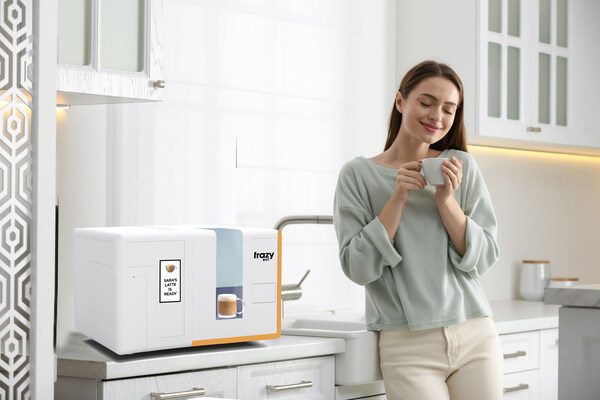
The FrazyBot is a countertop home beverage robot that makes specialty drinks ranging from cocktails like spicy margaritas to boba tea and coffee drinks. The robot, first introduced at last year’s CES, is available for preorder for $399. FrazyBot is modular and comes with a base module that has a touch panel and water reservoir. Users order their drink boxes from the website and once-inserted, the Frazybot will mix them. The company behind them, Frazy, is known for its coffee and beverage concentrates it ships to consumers via a DTC model and this appliance looks like a way for them possibly create another line of business for their beverage mixes. The biggest downside, in my opinion, is that the robot makes single-use drinks from each package – which seems like a big waste of packaging and cost for a home robot.

Artly Coffee Robots

Amazing Robotic A.I. Drinks and Coffee at Artly Coffee in Downtown Seattle, WA

Artly makes AI-powered barista bots that use deep learning and computer vision. The company says its robots are trained by award-winning professionals to perform complex tasks, including precise latte art. The company already has its robot barists operating in multiple locations across the U.S. and Canada and says its robots have served over half a million cups of specialty coffee, contributing to a significant revenue increase from $100,000 in 2021 to $1.8 million in 2023.

Health & Nutrition Tech

The Kirin Salt Spoon

We first saw Kirin making the rounds with its weird but intriguing Electric Salt Spoon in early 2024, and it looks like they’ll be bringing it to Vegas for CES. The device amplifies food’s saltiness by applying an electric current to the tongue. According to the product’s co-developer, the product works by using the current to draw more sodium into contact with the tongue, which in turn enhances the perceived saltiness of the food.

Netri’s Organ-on-Chip Platform Will Meaure for Food Toxicity Analysis

NETRI’s technology leverages its NeuroFluidics Care platform, which integrates advanced neuroscience and bioengineering to assess the toxic effects of compounds, including those used in the food industry. NETRI uses “organ-on-a-chip” systems, small devices engineered to mimic the structure and function of human organs, and these chips replicate aspects of the nervous system, enabling researchers to observe how compounds interact with neural tissues. The platform creates functional neural networks that are exposed to food-related compounds. By simulating human neural responses, it provides insights into the potential effects of these compounds on human health.

OrthoFoodie

The OrthoFoodie platform is a personalized nutrition and health optimization tool that integrates multiple features to deliver tailored dietary insights. According to the company’s website, users can log their meals or select from a database of foods and recipes. The platform analyzes the nutritional content of these inputs, providing detailed feedback on how they align with individual health goals. Based on user-specific data such as age, activity level, health objectives, and dietary preferences, OrthoFoodie generates recommendations to improve energy, immunity, and cognitive function.

Jelly Drops

Jelly Drops are sugar-free water candy that boosts independent hydration, support health and aid brain function. Made with 95% water, plus added electrolytes and vitamins. Originally created to assist individuals with dementia who often face challenges in maintaining adequate fluid intake, these treats have gained popularity among a broader audience seeking to boost their hydration.

Home Beverage Tech

The Kombu

KOMBU The Fermenstation

While kombucha is a little less trendy than just a couple years ago, those still on board the kombucha train can look to make it at home with the KOMBU Fermenstation countertop kombucha maker. The Fermenstation features a dual-compartment system: a 3.5-liter front glass jar for primary fermentation and a rear section holding four flavoring and secondary fermentation bottles. Each compartment is equipped with temperature-controlled heating pads to maintain optimal fermentation conditions. Users can monitor and control the brewing process via a mobile app, which allows for setting timers and adjusting temperatures remotely. This appliance is appealing mostly because it would allow would-be home kombucha brewers to sidestep the traditional method that requires keeping big piece of mold in a jar called a ‘mother’ alive.

Medipresso Smart Tea Maker

[MEDIPRESSO] IoT-Based Tea & Coffee Dual-Nozzle Capsule Machine

Medipresso’s Medino is a connected tea and coffee capsule machine focused on healthy beverage experiences. The machine, which is compatible with Nespresso capsules, uses dual nozzles to extra both tea and coffee. The device uses an app called Medina which the company says uses AI to make healthy tea recommendations.

Vinxper Electric Wine Decanter

The Vinxper Expert is a 4th-generation electric wine aerator which patented technology that allows precise adjustment of decanting times from 0 to 240 minutes, effectively replacing traditional glass decanters. Designed to enhance the flavor of young wines aged 3 to 7 years, it addresses common issues found in existing electric aerators, such as battery leakage and unstable aeration, by incorporating Type-C charging and a water-resistant design.

Grad Wine Cooler

GRAD, established in 2015 and based in Denmark, makes the Grad No.1, is a 100% portable and rechargeable wine cooler that maintains precise temperature control for any wine. The Grad has a battery life of up to 15 hours and a full recharge time of 2.5 hours,

OviBar Water Bar

Ovi le bar à eau économique, pratique et écologique

The OviBar is yet another water dispensing system. Still, this one connects directly to your home’s water supply and provides instant access to purified water at hot, cold, or room temperature. It has a three-stage filtration system, which includes two filters and UV sterilization, which the company claims effectively removes impurities while preserving essential minerals. It has a dedicated baby bottle mode that delivers water at an optimal 37°C, making it quick and efficient for infant feeding preparations.

Coffee Tech

Flavor Craft AI

Flavor Craft AI: The Ultimate Custom Coffee Experience Created by AI

The Flavor Craft AI system is a home food coffee blending appliance that uses AI to create personalized coffee mixes based on five flavor preferences (acidity, bitterness, astringency, richness and coffee strength.

Outin Portable Espresso Machine

How To Make Espresso With The OutIn Nano Portable Espresso Machine (Ground Coffee)

Want your Joe on the go? The Outin Nano might be for you. The Outin Nano Portable Espresso Machine is a compact, self-heating espresso-making appliance that allows you to brew espresso in your car, while camping or wherever you want to go. It weighs approximately 670 grams and standing about 9 inches tall, and the company claims it can make a rich crema and robust espresso comparable to traditional machines. It has a rapid heating system that brings water to optimal brewing temperature in 200 seconds, and the 7500 mAh rechargeable battery supports up to five extractions with cold water or over 200 with preheated water on a single charge.

REAL9 Fit Stepper Lever Home Coffee Robot

REAL9 FIT: Next-Generation Sustainable Espresso Machine

The REAL9 Fit home espresso maker from Zeroth Law utilizes a stepper motor instead of a boiler to extract espresso, which the company claims results in 97% less energy consumption compared to traditional machines. Its precise pressure control minimizes unwanted chemical reactions, ensuring non-rancid, full-flavored coffee. With a compact design, intuitive interface, and shareable extraction profiles, the REAL9 FIT empowers users to create barista-level coffee effortlessly, making it a versatile and eco-conscious choice for both professionals and enthusiasts.

AstroBrew

AstroBrew is an innovative countertop appliance that revolutionizes cold brew coffee preparation by reducing the traditional 12-24 hour steeping process to just minutes. Astro Brew says it uses patent-pending thermodynamic semiconductor technology, which combines pressure, turbulence, and recirculation to extract coffee flavors efficiently, resulting in a smooth, less acidic brew. The company says it can brew up to 34 ounces of cold brew coffee and keep it fresh for up to 30 days without refrigeration.

Beer Tech

Beer-o-Meter Portable Beer Testing Lab

We bring the LAB to you with Beer-o-Meter

The Beer-o-Meter is a portable lab testing tool for brewers. Compact and portable, this cube-shaped measures key brewing metrics like pH and ABV with no chemicals required. The company says the device has already undergone pilot testing with Dutch breweries, provided feedback that has been integrated into its ongoing development. Initially tailored for the craft beer market, the Beer-o-Meter leverages bioassay technology to ensure precise and reliable results, and the company plans to expand its applications into the point-of-care market.

Laxppy Automated Beer Dispenser

According to the company, the Laxppy Automatic Beer Dispenser is an automated beer dispenser for food service environments. It features two automatic outlets capable of dispensing two glasses of beer in just 12 seconds. Additionally, a manual outlet is available for more traditional pouring methods. The dispenser accommodates beer glass sizes ranging from 300cc to 500cc, making it versatile for various serving preferences. A 7.1-inch touch display provides an intuitive interface for easy operation and monitoring.

Smart Ovens

Agari Kitchen

Agari is developing a cooking robot designed which is says uses ” 3D scanning, remote temperature sensing, and precision algorithms. While more specific details about its features and capabilities are not yet publicly available, the company is preparing for an upcoming launch and encourages interested individuals to subscribe for updates.

DaanTech’s Fantastic Oven

Daan Tech is showcasing its Fantastic Oven at CES, which it first debuted at last year’s CES. The oven, which also goes by Joe (following the same naming convention as it had with its Bob dishwasher), is available for pre-sale now and will be available first in Europe. The oven features a microwave, steam, air fryer, convection and grill/toaster capabilities.

Chef AI

Chef AI, which debuted its oven at CES 2024, will be showing off its intelligent cookware system that utilizes thermal, weight, and dimensional data to monitor and control the cooking process. This advanced technology ensures precise cooking without the need for constant monitoring or external probes and has the capability to cook over 100 different foods.

Smart Kitchen

Spicerr Smart Spice Dispenser

Spicerr

If you’re looking for something a little different in smart kitchen this year at CES, check out the Spicerr smart spice dispenser that optimizes food flavoring and nutrient intake. The connected device uses interchangeable spice capsules and an app to provide precise seasoning tailored to the user’s taste preferences. The company says it has 100 high-quality spices, herbs, and extracts available in sealed capsules. The dispenser’s touchscreen interface allows for manual or automated dispensing, while the accompanying app uses AI to offer personalized recipes, flavor suggestions, and nutritional tracking.

Lissome R1 Tiny Dishwasher

LISSOME R1 Dishwasher: Clean, Dry , and Disinfect in One! 🌟

The Lissome R1 is a compact dishwasher designed for small apartments or homes where traditional dishwashers are impractical. The R1 is 11 inches wide, and uses ‘Sweeping Jet Technology’ with two bottom-rotating and two patented vertical spray arms, the R1 uses high-speed jets at 45,000 Pa to thoroughly clean dishes in just 15 minutes.

Versaware

A Visit With Versaware at CES 2023

We first saw VersaWare at CES in 2023, and they are back this year with their AI-powered smart cooking assistant designed to provide nutritional insights and personalized meal planning. With voice-activated commands, it offers features such as Nutrition Awareness, allowing users to monitor their intake of calories, carbohydrates, and vitamins. The Meal Building tool helps users craft recipes tailored to their dietary preferences, providing nutritional information for each ingredient. Recipe Discovery suggests dishes based on available ingredients, while Pantry Management keeps track of a person’s food inventory, alerting users to low-stock items and monitors expiration dates.

LG

LG will unveil the 36-inch Smart InstaView French Door Refrigerator, which as a fully transparent T-OLED display embedded in the upper right door, serving as both a touch interface and a Dual InstaView panel. This display allows users to view the fridge’s contents without opening the door and showcases hologram-like visuals. For some reason, the fridge provides a curated music playlist.

The company will also show off its ThinQ Food management system, powered by a built-in AI camera, which the company says will automatically identify stored items, suggest recipes based on ingredients and preferences, and track inventory and expiration dates.

Finally, LG will show off its new SIGNATURE microwave with entertainment and smart home integration. Equipped with three built-in cameras, it enables real-time cooking monitoring, time-lapse creation, and tracking of meals’ heating progress. Paired with the induction range powered by Gourmet AI, the microwave identifies ingredients and suggests recipes. The microwave has a 27-inch Full-HD touchscreen with InstaView, built-in speakers, and Wi-Fi connectivity, and LG says it can double as a hub for managing smart home devices through the LG ThinQ Smart Home Dashboard, supporting LG AI appliances and Matter/Thread-compatible devices.

Rejuvenate Fog-Powered Smart Garden

No, the Rejuvenate by Plantaform this isn’t a steam punk garden, but instead a smart garden that uses something called fogponics—a method of delivering nutrients to plant roots via nutrient-rich fog—to grow a variety of herbs, vegetables, flowers, and plants year-round. Designed for ease of use, it accommodates 15 plant pods and requires refilling only every 2-3 weeks, thanks to its efficient water usage. The system is managed through the Plantaform App, which allows users to monitor plant health, adjust light schedules, and receive care guidance.

Restaurant and Food Retail

PickPad

Pickpad Showcase

We’ve seen many smart checkout systems in recent years at CES, but Pickpad is a little different in that it is tailored for restaurants as a smart order pickup system. It enables restaurants to put orders-to-go on a smart pad. The modular system utilizes sensors and machine learning to integrate into existing food service environments and their point-of-sale systems without altering current processes. It automatically double-checks order accuracy, updates order statuses in real time, collects comprehensive data points, and personalizes the customer experience by displaying customer names when orders are ready.

January 4, 2025

The CES 2025 Food Tech Walk-Around Guide

Welcome to the CES 2025 Food Tech Walk-Around Guide!

If you’re at CES (or even if you’re not) and want to see what cool new food tech products will be on display this week, this is your go-to guide. You can also check out our CES Food Tech Preview, which takes a look at some of the companies we’re excited to see this week in Vegas.

Not only have we scoured the CES exhibitor guide, company websites, and all the press releases that have hit our inbox, but we’re also walking the show floor here in Vegas to bring you all the food tech news coming out of Vegas this week.

You can use the handy table below to read a description of what each is showing off at CES, as well as find a link that shows a map with the location of each company’s booth. The embedded airtable guide is also sortable, and you can pop out each company to get more information about them.

We’ll be keeping this list updated. If you don’t see your company on here (and you have a product to show), drop us a line.

February 9, 2024

Fresco Deal With Panasonic Brings Device Control & AI-Powered Planning to HomeCHEF Multi-Oven Lineup

At CES 2024, Panasonic announced that it had struck a deal with smart kitchen OS startup Fresco to integrate the Fresch kitchen OS platform with the Japanese brand’s multi-oven countertop cooking appliances.

The deal covers the US market and will see Fresco’s technology bring a new set of connected features to Panasonic’s multi-oven products, the first being the HomeCHEF 4-in-1 multi-oven. According to the announcement, the Fresco AI assistant will reside within the Panasonic app, allowing users to tailor recipes according to their dietary needs, substitute ingredients based on pantry availability, and change serving sizes and cooking preferences. Users can control cooking modalities, enabling steam cooking, air frying, and more through the app and get alerts about cooking status.

The deal marks a significant win for Fresco with one of the leading microwave manufacturers in the world, one that has been relatively aggressive about adding new cooking capabilities through its HomeCHEF multi-oven line. The partnership is interesting because it’s one of the first partnerships by a major microwave company to bring device control and AI-assisted cooking to their lineup.

According to Fresco, the HomeChef 4-in-1 will first be released in the US market in late 2024.

January 18, 2024

January AI’s New App Uses Generative AI to Predict How Food Will Impact Your Blood Sugar

If you’ve been diagnosed with a metabolic health issue, you might have used a continuous glucose monitor (CGM) at some point to track the impact of your food intake on your blood sugar. However, as of March 2023, only 2.4 million people used a CGM in the U.S., and because of the relatively small adoption rate of this technology, the vast majority of folks with diabetes or who are in danger of metabolic health issues may not have access to real-time insights into what the impact different foods may have on their glucose levels.

January AI aims to change this with its latest innovation: a free app that performs predictive analysis on the impact of various foods on blood sugar. The company, which unveiled its newest tool at CES last week, has developed an AI-powered app that analyzes meal photos and offers users immediate feedback on glucose impacts, macros, and healthier meal alternatives.

January says its app uses generative AI to automatically generate accurate food titles and estimates of ingredients and ingredient quantities within complex meals.

“It uses three kinds of generative AI to tell you your blood sugar response,” said Noosheen Hashemi, CEO of January, speaking at The Spoon’s CES Food Tech Conference last week. “It uses our own generative AI for glucose, and then it uses a vision generative AI to pick what’s in the food, and then it uses that language model to give it a title.”

According to the company, its AI-driven predictions are based on millions of data points, including wearable data, demographic information, and user reports. The company says this approach enables the app to provide personalized glucose level estimates and insights, making metabolic health management more accessible and actionable.

“It’s as simple as scanning a food,” said Hashemi. “You can also scan a barcode. You can also do a search. And we can tell you all the macro, its total calories, how much fiber, protein, fat, and carbs it has. And we can also show your blood sugar.”

According to Hashemi, the company’s platform can be customized and trained for specific users by taking data from a wearable such as a smartwatch, a person’s glucose monitor, or even food logs. With that data, the app can create highly customized predictions around a person’s biomarkers and dietary preferences.

“One out of three people in America has pre-diabetes, and 90% of them don’t know it,” said Hashemi. “And one out of nine people has diabetes, and 20% of those people don’t know it. So blood sugar is something we should all be managing, but we just don’t know that we should.”

Given the increasing popularity of GLP-1 medications, my guess is that more Americans will start to consider how their diet affects their blood sugar in the coming years. And, even if they don’t use a glucose monitor or get a prescription for a medication like Ozempic, increased awareness will push many to use apps like this one to help them better understand how a given food will impact their blood sugar and overall health.

You can hear Hashemi discussing the app and showing a demo in the video below.

January AI CEO Talks About New Generative AI App at CES

January 17, 2024

Revolution’s New Smart Toaster Will Have Wi-Fi and Tell You The Weather

Last week at CES, Revolution Cooking, a company that’s made a name for itself by creating the world’s most high-end, tech-enabled toaster, gave us a sneak peek at its latest-generation bread crisper.

The new Revolution toaster, which the company says will ship on May 1st, not only has the same recognizable touchscreen and proprietary and patented InstaGLO heating technology that powers the first generation toaster (and the new Macrowave oven), but it will be the company’s first Internet-connected edition.

So, why add Wi-Fi to a toaster? According to Sean Robbins, Revolution’s head of marketing, one obvious reason is to enable over-the-air feature rollouts and improvements to the product’s heating technology. However, perhaps the most significant reason relates to the role a toaster plays in a toast-lover’s daily routine.

“People who love to toast, it’s kind of a daily ritual for them,” said Robbins. “So we talked to our best customers and asked them what would you love to have on the home screen. We heard things related to what their daily routine is. ‘I want to start my day and make my toast, and I wonder what the weather is that day.'”

According to Robbins, the Revolution connected toaster is also the first to get the green light from UL. The product safety standard company, well-recognized for its certification stamp of approval, had previously frowned upon Internet-connected toasters. This is because adding connectivity to a product with an open heating element was considered a significant safety concern. Because of this, Robbins says that owners of their new toaster still won’t be able to remotely control the heating element, but they will have the comfort (and perhaps more importantly, retailers will have the comfort) that UL says this thing is safe.

While the Internet-connected toaster has become something of an Internet meme, often used to ridicule over-engineered products and an Internet of Things gone awry, there have been relatively few attempts to add connectivity to toasters. While some have taken a swing (and the tech press commentators have reacted predictably), the reality is since Revolution essentially kickstarted the whole high-end touchscreen toaster craze (there are a bunch of copycats on Amazon now) and has built a loyal customer base for its tech-enabled toaster, my guess is that they’ll likely find a receptive audience for those who also want their toaster to tell them whether they should bundle up for the day.

You can watch my interview with Robbins below.

Revolution Talks About Its Latest Smart Toaster at CES 2024

January 15, 2024

The Kara Pod is a Coffee Machine That Refills Itself by Pulling Water from Thin Air

This year at CES, Kara Water debuted the Kara Pod, a combo coffee brewer and air-to-water countertop machine. The Kara Pod takes company core technology, which turns humidity from the air into drinking water, and combines it with a coffee machine that can produce up to almost a gallon of water (3.2 liters) per day, which can be used as drinking water or for brewing coffee.

Kara Water was founded in 2017 by Cody Sooden and Michael Di Giovanna. The two wanted to create a machine that could produce clean drinking water free of contaminants. Sooden’s interest in the technology started after he began experimenting with capturing water from air while studying architecture. He eventually wrote a research paper on harvesting moisture from the air, which ultimately became the genesis of the company’s technology.

Kara Water isn’t the first company to show off water-from-air technology at CES. We’ve seen Watergen debut a working model in 2020, and Zero Mass Water, which uses solar power to capture moisture and turn it into drinking water, showed off its machine at CES 2019. But this is the first countertop appliance model we’ve seen and the first time we’ve seen air-to-water combined with a coffee machine.

According to Sooden, the Kara Pod will start shipping in March for $299. You can watch our interview with Sooden below.

The Kara Pod Coffee Maker Gets Water Refilled From Out of Thin Air

January 12, 2024

Watch This Tour of The Yo-Kai Boba Robot at CES 2024

In what seems to be an annual occurrence at this point, this year Yo-Kai introduced a new robotic food kiosk and drew huge crowds at CES. This year, it was the company’s new boba robot, which features the ability to cook boba inside as well as prepare both hot and iced drinks.

The Spoon dropped by the Yo-Kai booth to get a video tour of the new boba-bot with company CEO Any Lin. When we broke the story of the Yo-Kai boba-bot a couple of weeks ago, we revealed that the company planned to open up a new sales channel by embracing small business owners through franchises. According to Lin, one of the reasons this new appliance helps make this possible is, unlike the ramen noodle bots that helped the company make a name for itself, the new boba bot only uses room-temperature, shelf-stable ingredients. That means they can ship ingredients to users without requiring large-scale cold chain logistics networks, a requirement which often necessitates bigger partners.

Whether you’re a small business interested in franchising a Yo-Kai boba machine or just a boba-loving nerd, you’ll want to check out the video below.

Tour of Yo-Kai's Boba Robot at CES 2024
Next

Primary Sidebar

Footer

  • About
  • Sponsor the Spoon
  • The Spoon Events
  • Spoon Plus

© 2016–2026 The Spoon. All rights reserved.

  • Facebook
  • Instagram
  • LinkedIn
  • RSS
  • Twitter
  • YouTube
 

Loading Comments...